
Now Reading: Media roundtable tackles sustainability crisis
-
01
Media roundtable tackles sustainability crisis

Media roundtable tackles sustainability crisis
by SAVIOUS KWINIKA
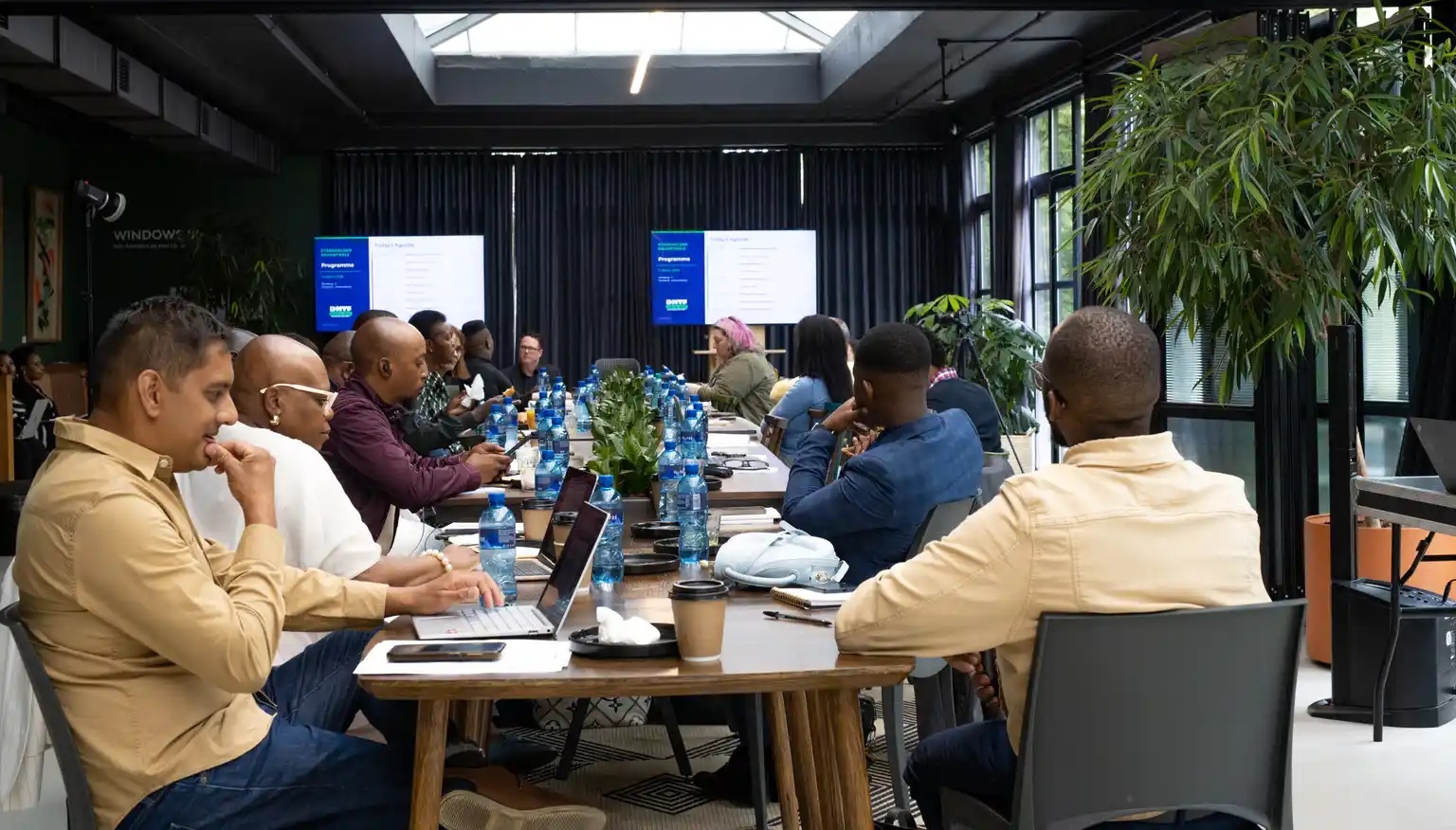
JOHANNESBURG – THE future sustainability of South Africa’s independent media sector has come under renewed scrutiny, with industry leaders calling for stronger governance, transparency and digital adaptation at a high-level stakeholder roundtable convened by the Digital News Transformation Fund (DNTF).
The Johannesburg engagement brought together key players from across the media ecosystem, including the South African National Editors’ Forum (SANEF), the Press Council of South Africa, the Association of Independent Publishers (AIP), the Black Media Owners Association (BMOA), the Media Development and Diversity Agency (MDDA) and the African Chamber of Media (ACM), alongside publishers and other stakeholders.
Deliberations centred on the Fund’s governance framework, transparency in grant allocation, stakeholder engagement and access to funding across its three support tiers — Build, Grow and Engage — particularly for smaller publishers at early stages of digital transformation.
A representative of the Fund emphasised the importance of balancing accountability with impact.
“Stakeholder engagement is about balancing a development mindset with good governance so that the fund remains credible and delivers sustainable impact,” she said.
“We are trying to meet the diverse needs of many different types of publishers. It is important that everyone has confidence in the fund so that when resources are deployed, they achieve real impact.”
Accountability in decision-making emerged as a central theme. Sebenzile Nkambule, a member of the DNTF Oversight and Advisory Board, said safeguarding credibility required strict governance controls.
“We took reasonable measures to make sure any perception of conflict was well managed, and that board members did not have a say on the individual projects recommended for funding,” she said.
Nkambule added that the introduction of the Ignite sub-tier addressed capacity constraints among smaller publishers.
“In blocking funding to these publishers, whole communities are left behind. Once we realised many publishers did not have the capacity to take on more funding, the Ignite sub-tier came about,” she explained.
Participants also highlighted structural challenges, including revenue pressures, reliance on digital platforms and uneven readiness for digital transition.
Sello Makgobatlou, chairperson of ACM, noted the difficulties facing rural and black-owned media.
“It is going to take time to learn how to use Google and social media. Consumers still want the hard copy, something physical,” he said.
Roundtable moderator Izak Minnaar underscored the urgency of adaptation.
“What we are trying to do is help publishers slowly bring more people into their digital reach. If they do not start planning for a digital future, they may die,” he warned.
Vincent Maher, DNTF co-chair, raised concerns about inequities in advertising markets.
“Our democracy is under threat because marketers are not supporting smaller publishers through their media buying power,” he said.
From its first funding round, the Fund received 164 applications, approving 21 projects from a R10.7 million allocation. A second funding phase has now progressed, with 133 applications received.
Stakeholders agreed that the sector’s future will depend not only on funding, but on building trust, strengthening governance and accelerating digital transformation.
– CAJ News
Previous Post
Next Post












Advertisement