
Now Reading: China advances in crewed space technology
1
-
01
China advances in crewed space technology

China advances in crewed space technology
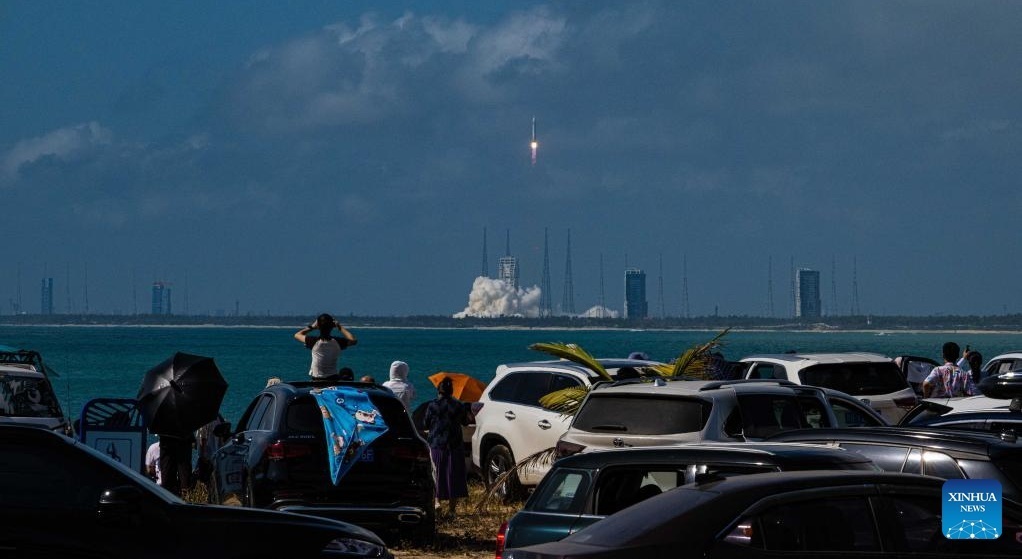
BEIJING – CHINA has successfully carried out its first maritime search and recovery of a crewed spacecraft return capsule, marking a significant milestone in the country’s rapidly advancing space programme.
The Mengzhou (“Dream Vessel”) spacecraft, China’s new-generation vehicle designed for human spaceflight, completed a maximum dynamic pressure abort test before making a safe splashdown at sea.
The test formed part of a low-altitude demonstration and verification flight of the Long March-10 carrier rocket, a key launch vehicle intended to support future lunar missions.
At 12:20 p.m. Beijing Time, maritime search and rescue teams successfully retrieved the return capsule from the ocean.
According to the China Manned Space Agency, the operation provides invaluable technical experience for future space station missions and planned crewed lunar landings.
This achievement represents more than a technical success. Sea-based recovery significantly enhances operational flexibility, safety and mission resilience.
By mastering maritime retrieval, China strengthens its ability to conduct complex human space missions, including those beyond low Earth orbit.
The Mengzhou spacecraft itself has been designed primarily for crewed lunar exploration, while also supporting space station operations. N
otably, its return capsule is built for multiple reuses, underscoring a commitment to cost efficiency and sustainable space travel.
China’s expanding capabilities in space technology reflect its broader investments in science, engineering and innovation.
Over the past two decades, the nation has developed its own space station, advanced navigation systems, high-speed telecommunications infrastructure and cutting-edge satellite networks.
These achievements have implications beyond exploration: space technologies drive advances in weather forecasting, disaster management, communications, environmental monitoring and national security.
As China strengthens its presence in space, it is also reshaping global technological competition. Leadership in aerospace, artificial intelligence, quantum research and advanced manufacturing is increasingly central to economic power and geopolitical influence. The integration of civilian and defence technologies further enhances national capabilities in both commercial and military domains.
For the wider world, such developments highlight the transformative power of scientific ambition. Investment in research, education and technological innovation can elevate economies, create high-skilled employment and inspire future generations.
China’s latest success serves as a reminder that embracing science and technology is not merely about prestige — it is about shaping a future defined by discovery, resilience and progress.
– CAJ News
Previous Post
Next Post


Donations










Advertisement

Loading Next Post...